Every extension method has its ideal candidate and very few methods are truly universal. The question isn’t which type of extensions is best overall; it’s which is best for your specific hair, your lifestyle, and what you’re actually trying to achieve. Here’s the method-by-method breakdown from a specialist’s perspective, including who each method is genuinely designed for.
Tape-In Extensions: Accessible, Flat, and Best for Fine to Medium Hair
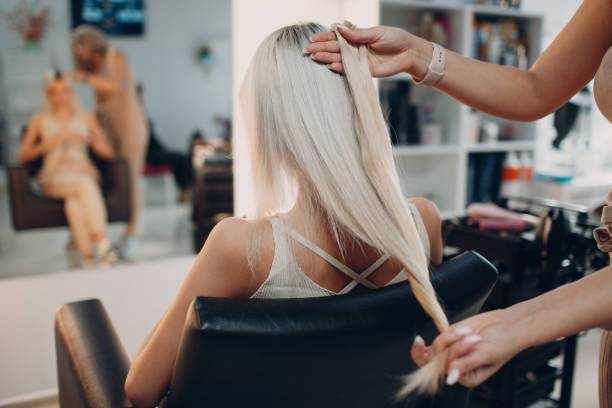
Tape-in extensions attach thin wefts of hair on either side of a small horizontal section of your natural hair using medical-grade adhesive. They’re low-profile the bond sits close to the scalp and lies flat in a way that’s difficult to see even in fine hair. Installation typically takes 1.5–2.5 hours, which makes them the most time-efficient of the three methods for the client.
They’re well-suited to fine or medium hair because the weft distributes weight across a wider section of strands rather than concentrating it at a single attachment point. For clients who want a professional result at an accessible price point and are willing to commit to 6–8 week maintenance appointments, tape-ins are a logical choice.
The most important thing about tape-ins: proper removal. The adhesive must be dissolved with a solvent, not pulled. Fine hair in particular cannot handle the mechanical force of tape being peeled off without a remover and any salon that doesn’t use one isn’t treating your hair with appropriate care.
Hand-Tied Weft Extensions: The Premium Choice for Natural Look and Hair Health
Hand-tied wefts are a technique that most extension specialists suggest for clients who want natural movement, long-term hair health, and a seamless blend. The weft carefully hand-tied instead of machine-sewn is secured to a row of microbeads placed evenly across your scalp. There is no glue, no heat, and no adhesive involved. The weight of the extensions is distributed across the entire row, making them a popular choice for professional hair extensions rather than putting pressure on single points.
For fine or thinning hair, this distributed load is a significant advantage. For any hair type, the result is flatter and more natural-looking than K-tip or tape methods because there’s no individual bond to feel or see through the hair. Installation takes 3–5 hours and requires a more advanced skill set hand-tied wefts done by someone without extensive training look noticeably different from those done by a specialist.
Maintenance every 8–10 weeks is required. At a professional salon for extensions in the Hamptons, the reinstall includes removing each row, refreshing your natural hair, and resetting the extensions. This is also a good time to address any color blending or length adjustments needed.
K-Tip (Keratin-Tip) Extensions: Maximum Customization for Medium to Thick Hair
K-tip extensions place individual strands with a keratin adhesive at the tip, fused to your natural hair with a heating tool. The application is the most customizable of any method each strand is placed independently, giving the specialist full control over where density is added, how much, and at what angle. For a client who wants extra volume specifically at the crown, or length that adds to just the back sections, K-tips allow for that precision.
They work best on medium to thick hair. The keratin bond sits slightly raised at the attachment point, which can be detectable in very fine hair. They also require careful heat styling after install. Keeping direct heat away from the keratin tips is important for longevity, and a client who heat-styles aggressively every day needs to account for that in their maintenance schedule.
K-tips last 3–5 months between maintenance appointments, which is one of the longer windows of any permanent method. The install itself takes 3–5 hours. Removal requires acetone or a keratin bond remover same principle as tape-ins, same rule: solvents only, never force.
The Variables That Actually Decide the Right Method for You
Hair type gets you most of the way there, but a few lifestyle factors push the final decision. Do you swim regularly in the ocean, pool, or bay? Salt water and chlorine affect adhesive bonds, and a beach-heavy Hamptons lifestyle is worth flagging at your consultation. Do you heat-style daily? Daily heat near K-tip bonds accelerates maintenance needs. Do you want to wear your hair up for work or events? Placement for upstyles is different from placement for hair-down looks, and a specialist who doesn’t ask about this is missing part of the picture.
The final variable: color. Your extension hair needs to match your natural hair (including any highlights, balayage, or color you’re currently wearing), or it needs to be color-matched and custom-toned before the install. A salon for extensions in the Hamptons that also offers professional hair color services under the same roof like Salon East Hamptons on East Montauk Highway can handle this as a combined service rather than two separate appointments coordinated between different salons. Learn more about How Can You Get Fashionable Hair Color That Lasts? Expert Tips from Hampton Bays Colorists
Frequently Asked Questions
How do I know which professional hair extensions are best for my hair type?
The best choice depends on your hair’s density and your lifestyle. Tape-in extensions are ideal for fine to medium hair because they distribute weight across a wider section of strands. Hand-tied weft extensions are a premium choice for those seeking natural movement and long-term hair health without glue or heat. For maximum customization in specific areas like the crown, K-tip (Keratin-Tip) extensions are often recommended for medium to thick hair.
What makes Salon East Hamptons a top hair salon for extensions in the Hamptons?
We provide a specialized approach where every install is preceded by a professional assessment of your hair’s current state. Our specialists are trained in advanced techniques like hand-tied wefts, which require a higher skill set for a seamless blend. Additionally, because we offer expert hair coloring in-house, we can custom-tone your premium hair extensions to perfectly match your natural hair or highlights in a single coordinated session.
How does a Hamptons lifestyle affect the maintenance of my extensions?
Active lifestyles involving regular swimming in the ocean or pools can affect the adhesive bonds of tape-ins. We recommend flagging these activities during your consultation so our [suspicious link removed] can suggest the most durable method for you. Generally, maintenance appointments are required every 6–8 weeks for tape-ins and every 8–10 weeks for hand-tied rows to refresh your natural hair and reset the extensions.