Fine hair and hair extensions have a messy history. Search any Long Island or Hamptons beauty forum and you’ll find horror stories from people with fine hair who came out of extension installs with breakage, visible bonds, and a maintenance nightmare they weren’t warned about. You’ll also find people who say extensions changed everything for them. The difference isn’t luck it’s almost always the method chosen and the specialist who applied it. This is the breakdown you actually need before booking anything.
Understanding the Difference: Fine Hair vs. Thin Hair for Extensions
These terms get used interchangeably, but they mean different things and they affect your extension options differently. Fine hair refers to the diameter of the individual strand structurally delicate, regardless of how much of it you have. Thin hair (or low-density hair) refers to the total amount of hair on your scalp. You can have a lot of fine hair, or a small amount of coarse hair. Both conditions point toward different extension solutions.
For fine hair specifically, the concern is that individual strands don’t anchor attachment points as securely and are more vulnerable to breakage from concentrated tension. For thin or low-density hair, the main concern is that extensions can look obviously added rather than blended because there isn’t enough natural hair to cover the attachment points.
A thorough consultation with a professional hair extensions specialist will distinguish between these two situations and recommend accordingly. A one-size-fits-all extension recommendation is a red flag.
Best Hair Extensions for Fine Hair: Hand-Tied Wefts Lead the Conversation
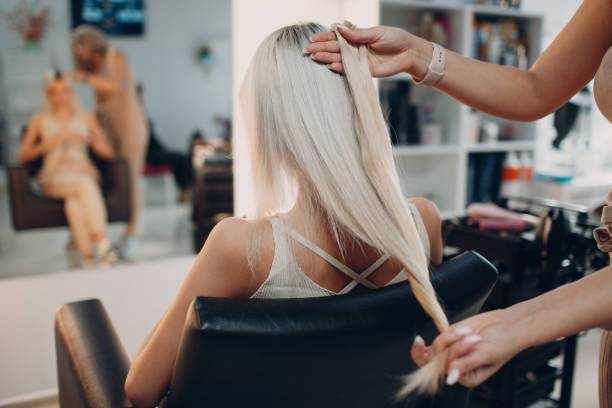
Consistently, the method that professional hair extension specialists recommend first for fine hair is hand-tied wefts. Here’s why: instead of attaching extensions at individual strand points which concentrates weight and tension on small clusters of your natural hair hand-tied wefts are sewn onto a row of microbeads distributed across a horizontal section of your scalp. The weight is shared across that entire row rather than spiked at individual points.
For fine hair, this distributed load is the difference between a method that works and one that doesn’t. There’s also no heat, no glue, no adhesive involved in the install which eliminates a category of chemical stress that can compound damage in already-delicate hair.
The finished result with hand-tied wefts is also the most natural-looking of any permanent method. The weft lies absolutely flat against the scalp with no raised bond to feel or see through fine hair. Movement and blending the two things that make extensions look real are where hand-tied wefts outperform every other method on the market.
Tape-In Extensions for Fine Hair: The Right Conditions
Tape-in extensions are the second most-recommended method for fine hair, and in certain situations they edge out hand-tied wefts particularly for clients who are new to extensions and want to try a professional result without committing to the higher investment of a hand-tied install.
The weft on a tape-in is roughly an inch wide and sandwiched on either side of a thin section of your natural hair. The flat profile means it lies close to the scalp, which helps with concealment in fine hair. The weight per weft is lower than many people expect, and when installed at the correct placement distance from the scalp (critical too close causes pulling; too far causes slippage), they’re genuinely comfortable.
The caveat for fine hair: the removal process must be done properly with a solvent, not force. Fine hair cannot absorb the mechanical stress of adhesive being pulled from the strand without damage. This is non-negotiable. Any salon for extensions that doesn’t use a proper removal solvent isn’t appropriate for fine-haired clients.
K-Tip Extensions for Fine Hair: Proceed With Caution
K-tip (keratin-tip/fusion) extensions involve individual pre-bonded strands that are fused to your natural hair using a heat-activated keratin adhesive. They are highly customizable the specialist applies each strand one by one, allowing full control over density and where volume is added. For medium to thick hair, K-tips are an excellent option for premium hair extensions.
In fine hair, the main challenges are visibility and load concentration. The individual keratin bond sits slightly raised at the attachment point, and in fine hair those bonds can sometimes be felt through the hair or seen when light hits from a certain angle particularly near the temples and nape where fine hair is thinnest. The per-strand weight concentration is also higher than with weft methods, which can stress delicate strands over time.
Micro K-tips (smaller bonds, designed for fine hair) partially address the visibility issue. But they still require a specialist experienced in fine-hair extension work to place correctly. If a salon offers K-tips as a standard menu item without distinguishing between hair types during consultation, that’s worth noting.
What to Absolutely Avoid With Fine Hair Extensions
Beaded or micro-link extensions that attach at individual strand points are generally not the first recommendation for genuinely fine hair the concentrated clamping force of the ring on a small section of fine strands can cause slippage and stress. This doesn’t mean they can never work on fine hair, but they require a very experienced specialist who sizes beads precisely to your strand diameter and doesn’t overload attachment points.
Clip-in extensions, while a no-commitment option, put all their weight on clips that snap directly onto your natural hair. On fine hair, daily wear creates noticeable tension at those snap points. Clip-ins for special occasions are fine; daily clip-in wear on fine hair is a path to traction-related damage over time.
And wherever you book: if a specialist doesn’t ask about your hair history, your styling habits, and your lifestyle before recommending a method find a different specialist. A proper consultation for fine-haired extension clients takes time. Cutting that short is cutting corners on your hair. Learn more about How Much Do Professional Hair Extensions Cost at a Salon in the Hamptons?
Frequently Asked Questions
Will hair extensions damage my fine hair?
When installed correctly by a specialist experienced in fine hair, professional hair extensions should not damage your natural hair. The risk comes from method mismatch, improper removal, skipping maintenance appointments, or going to a stylist without extension specialization. Fine hair requires more careful method selection and more attentive maintenance than thick hair which is why the specialist’s experience level matters more, not less, when your hair is delicate.
How do I know if my hair is too fine for extensions?
Very few people are genuinely too fine for any form of professional extension. The conversation is more about which method is appropriate. Even significantly fine or thinning hair can work with hand-tied wefts installed carefully on a reduced number of rows. A specialist who says fine hair can’t do extensions is either limiting their recommendation to methods they’re most comfortable with, or hasn’t worked extensively with fine hair clients.
How long do extensions last on fine hair?
The extension hair itself lasts 6–12 months. Maintenance appointments are scheduled based on the method: tape-ins every 6–8 weeks, hand-tied wefts every 8–10 weeks. Fine hair doesn’t change these timelines but skipping maintenance as your natural hair grows shifts weight and tension in ways that fine hair is particularly vulnerable to. Staying on schedule matters more for fine-haired clients than for thick-haired ones.
Can I get extensions if my hair is thinning at the crown?
Yes and extensions are often used specifically to address crown volume. Hand-tied wefts can be strategically placed to add density at the top without adding heavy weight to areas where hair is most sparse. The technique requires a specialist who understands thinning patterns and knows how to place extensions to support rather than stress the remaining hair. Mention crown thinning explicitly at your consultation so the specialist can plan placement accordingly.
What’s the most natural-looking extension method for fine hair?
Hand-tied wefts consistently produce the most natural result on fine hair because the attachment is completely flat, there are no individual bonds to detect, and the hair moves freely. When matched to your color and cut correctly after the install, hand-tied wefts are virtually indistinguishable from natural hair even in finer textures. This is the method most commonly used for the seamless, undetectable results you see in professional portfolios.