Why Professional Hair Extensions in the Hamptons Require a Specialist, Not Just a Stylist Extensions are a specialty service, full stop. A general stylist who occasionally does extensions is a completely different thing from a dedicated extension specialist who does them daily. The difference shows up in the placement, the color matching, the cut after install, and most importantly how your natural hair fares over the following months.
The Hamptons clientele in particular tends to have specific lifestyle demands: saltwater, sun exposure, beach days from Memorial Day to Labor Day, and social events where your hair has to perform at a genuinely high level. Premium hair extensions installed by a skilled specialist hold up to all of that. Extensions put in by someone without proper training often don’t and the damage that can result from poorly installed or maintained extensions is a corrective process that takes far longer to fix than the original install.
At Salon East Hamptons on East Montauk Highway, the extension consultation includes a full hair health assessment before any method is discussed. That means the recommendation you receive is based on your actual hair not a default answer.
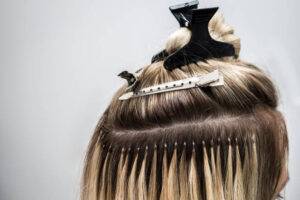
Hand-Tied Wefts: The Premium Extension Method for the Hamptons Hand-tied wefts are widely regarded as the most seamless and natural-looking of the permanent extension methods currently available. The weft a row of hair that’s literally hand-tied rather than machine-stitched is attached to a row of microbeads sewn into your natural hair. No glue, no heat, no adhesive of any kind. The result is a flat, nearly invisible attachment that moves the way your natural hair does.
For Hamptons clients who want premium hair extensions with maximum natural movement the kind that looks like your hair just happens to be this full and long hand-tied wefts are the method that consistently delivers that result. They’re also the best option for hair that’s been previously colored or chemically treated, since the install doesn’t add any chemical stress to the strand.
Maintenance is required every 8–10 weeks as your natural hair grows. The reinstall process at a professional salon involves removing each row, cleansing and refreshing your natural hair, and resetting the extensions. Budget accordingly this is an ongoing commitment, not a one-time service.
K-Tip Extensions: Individual Strand Precision for Volume and Length K-tip extensions (keratin-tip, also called fusion extensions) attach individual pre-bonded strands to your natural hair using a keratin adhesive activated by a low-heat tool. The application is meticulous each strand is placed individually, which gives the specialist total control over density and placement. Want extra volume at the crown but not the sides? K-tips allow for exactly that kind of customization.
They’re durable lasting 3–5 months between maintenance appointments and when done well, they’re virtually undetectable. The trade-off is time: a full K-tip application typically runs 3–5 hours. They also require careful heat styling after install, since concentrating heat near the keratin bonds can weaken them prematurely.
K-tips work best on medium to thick hair. For very fine or thinning hair, the individual bonds can sometimes be felt or seen through the hair, especially near the temples. A specialist who’s honest about your hair type will tell you this upfront rather than booking the service regardless.
Tape-In Extensions: The Accessible Entry Point to Professional Hair Extensions Tape-in extensions use thin wefts of hair attached on either side of a small section of your natural hair using medical-grade adhesive. They’re thinner and lighter than most people expect, and they lie remarkably flat against the scalp making them one of the most discreet options even in fine hair.
For clients who are new to extensions and want to try a professional result without committing to a longer install process, tape-ins are a logical starting point. Maintenance runs every 6–8 weeks. The removal process matters enormously always confirm your salon uses a proper adhesive solvent, not force. Tape-in extensions that are yanked out without solvent cause the kind of breakage that gives extensions a bad reputation.
One Hamptons-specific note: saltwater and chlorine from pool communities like Quogue, Westhampton Beach, and Dune Road can degrade adhesive bonds faster than in drier climates. Letting your extension specialist know your summer activity level will help them advise on the right maintenance schedule. Learn more about Expert Hair Color Correction Services in Hampton Bays: Balayage, Highlights & Color Transformation
Frequently Asked Questions How long do hair extensions last in the Hamptons with a beach lifestyle? The extensions themselves (the hair) typically last 6–12 months with proper care. The attachment method determines your maintenance schedule: tape-ins every 6–8 weeks, hand-tied wefts every 8–10 weeks, K-tips every 3–5 months. Salt water and chlorine exposure can accelerate bond degradation on adhesive-based methods, so active beach clients sometimes need more frequent maintenance than that standard window suggests.
Can I swim in the ocean with professional hair extensions? Yes with some precautions. Rinse your hair thoroughly with fresh water before and after swimming to minimize salt and chlorine exposure at the bonds. Use a leave-in conditioner or protective oil on the lengths before swimming. Avoid leaving salt or chlorine to dry in the hair after a swim, and braid or loosely tie hair before getting in the water to reduce tangling. Your specialist will give you specific guidance based on the method used.
What hair extension method is best for fine hair in the Hamptons? Hand-tied wefts and tape-ins are the most recommended methods for fine hair. Both distribute weight across a wider section of natural hair rather than concentrating it at individual attachment points. K-tips and beaded (micro-link) methods apply more concentrated tension per attachment, which can stress fine strands. A consultation with a specialist at a hair salon for extensions in the Hamptons will confirm which method your specific hair density can best support.
How much do best hair extensions cost at a Hamptons salon? Pricing varies by method and hair volume required. Tape-ins typically start around $500–$900 installed. Hand-tied wefts and K-tips run $1,000–$3,000+ for a full application, depending on the number of rows or strands and the quality of hair used. Maintenance reinstalls are a recurring cost. Salon East Hamptons uses VISH product-weight pricing for transparency you pay based on what was actually used, not an estimated flat rate.
Do I need to disclose previous color history before getting extensions? Always. Previous chemical treatments especially bleaching, relaxing, or box dye affect both which method is appropriate for your hair and how the extension hair needs to be matched and colored. A specialist who skips this conversation isn’t doing a proper assessment. At Salon East Hamptons, the consultation always starts with a full hair history before any method recommendation is made.